

Ronin Network's pivot to Ethereum Layer 2 rollups marks a calculated evolution for Axie Infinity and its sprawling Web3 gaming ecosystem. As governing validators scrutinize the upgrade proposal, the blockchain's final hardfork looms in Q1-Q2 2026, promising Ethereum-aligned security without sacrificing the low-latency edge that fueled Axie Infinity's explosive growth. With AXS holding steady at $1.29 amid a 0.77% dip over the past 24 hours, this ronin l2 transition signals resilience in a maturing market, where scalability trumps hype.
Sky Mavis, Axie Infinity's steward, built Ronin as a sidechain to sidestep Ethereum's early congestion, birthing a gaming juggernaut that peaked with millions of daily active users. Yet, as Ethereum's rollup-centric roadmap solidified, Ronin's isolation grew untenable. The shift to L2 rollups isn't mere technical housekeeping; it's a strategic homecoming, tapping Ethereum's liquidity and institutional momentum while deploying 'Proof-of-Distribution' to incentivize enduring developer commitment over transient speculation.
Ronin's Roots in Axie Infinity and the Imperative for Rollups
Axie Infinity didn't just popularize play-to-earn; it forged Ronin into a gaming-optimized chain, processing transactions at speeds Ethereum couldn't match in its proof-of-work days. The network effect was palpable: communities coalesced, dApps proliferated, and ronin rollups axie infinity became synonymous with scalable onchain gameplay. But sidechains carry inherent risks - centralized validators, settlement vulnerabilities - that Ethereum's L2 stack now mitigates through optimistic rollups and data availability layers.
Recent discourse from Ethereum Magicians underscores this maturation: rollups are advancing toward Stage 1 security, with finality guarantees tightening. Ronin's alignment positions it to inherit these upgrades, potentially slashing costs further while inheriting Ethereum's censorship resistance. For investors eyeing Web3 gaming, this ronin layer 2 upgrade timeline offers a hedge against L1 bottlenecks, though execution risks linger in validator consensus.


Key Milestones in the Ronin L2 Migration Roadmap
The ronin network l2 migration guide, pieced from official blogs and governance forums, unfolds methodically. Validators are presently auditing the hardfork specs, with deployment eyed for early 2026. Q1 targets initial rollup activation, bridging Ronin's state to Ethereum via the OP Stack for 15x transaction velocity gains in gaming dApps. By Q2, full Ethereum equivalence locks in, ushering gamified DeFi and SocialFi expansions.
This phased approach minimizes disruption - no user migrations required, seamless wallet continuity via Ronin Developer Console tools. Uniswap's governance even floats v3 deployment on Ronin post-transition, hinting at DeFi inflows that could bolster RON utility beyond gaming fees. From my vantage in quantitative finance, such interoperability fortifies portfolio resilience, distributing risk across Ethereum's fortified base layer.
Consider the stakes: Ronin's gaming product-market fit, honed by Axie Infinity, now scales to Ethereum's tokenization surge. Stablecoin settlements and financial primitives will gamify yields, drawing institutional capital wary of pure speculation.
Axie Infinity Shard (AXS) Price Prediction 2027-2032
Post-Ronin L2 Transition Forecasts: Conservative to Optimistic Scenarios Driven by Ethereum Alignment, Developer Incentives, and Web3 Gaming/DeFi Growth
| Year | Minimum Price | Average Price | Maximum Price | YoY Change % (Avg from Prev Year) |
|---|---|---|---|---|
| 2027 | $2.50 | $4.00 | $7.00 | +33% |
| 2028 | $3.50 | $6.00 | $12.00 | +50% |
| 2029 | $4.00 | $8.00 | $16.00 | +33% |
| 2030 | $5.00 | $10.00 | $20.00 | +25% |
| 2031 | $6.00 | $13.00 | $26.00 | +30% |
| 2032 | $7.50 | $17.00 | $35.00 | +31% |
Price Prediction Summary
AXS is forecasted to experience steady growth post-2026 Ronin L2 transition, with average prices climbing from $4.00 in 2027 to $17.00 by 2032. Minimums reflect bearish market cycles and competition, while maximums capture bullish adoption surges in gaming and DeFi. Projections assume successful Ethereum integration and favorable crypto market conditions from a 2026 baseline average of ~$3.00.
Key Factors Affecting Axie Infinity Shard Price
- Successful completion of Ronin L2 transition to Ethereum rollups in Q1-Q2 2026 enhancing scalability and security
- Proof-of-Distribution incentives attracting developers and fostering ecosystem growth
- Expansion into gamified DeFi and SocialFi beyond gaming, boosting utility
- Alignment with Ethereum's institutional adoption and improved L2 finality
- Crypto market cycles influenced by Bitcoin halvings and macroeconomic trends
- Regulatory developments favoring blockchain gaming and tokenized assets
- Competition from other gaming L2s like Immutable X, but Ronin's Axie network effects provide edge
Disclaimer: Cryptocurrency price predictions are speculative and based on current market analysis. Actual prices may vary significantly due to market volatility, regulatory changes, and other factors. Always do your own research before making investment decisions.
Strategic Implications for Developers and Gamers
Developers stand to gain most from this ronin l2 transition. Ronin Docs outline environment setups primed for rollup interactions, with API references streamlining dApp ports. The co-incentives model, echoing Uniswap's playbook, rewards sustained contributions, countering the churn that plagued early gaming chains. For gamers, expect sub-second finality in Axie battles, unhampered by L1 gas wars.
Yet, prudence dictates scrutiny: L2 finalization roadmaps evolve, and Ronin's validator review could delay timelines. As an FRM-certified strategist, I advocate positioning via diversified exposure - AXS at $1.29 presents a measured entry, predicated on flawless execution. The Ethereum Foundation's tacit support via rollup partners underscores credibility, but market volatility demands vigilant risk management.
Ronin's ronin l2 transition extends beyond gaming silos, positioning it as a versatile L2 for Ethereum's burgeoning DeFi and SocialFi landscapes. Gamified yields could lure stablecoin holders seeking frictionless interactions, while SocialFi dApps leverage Ronin's proven user acquisition from Axie Infinity. This expansion dilutes gaming dependency, a prudent diversification in my risk-managed view.
Ronin L2 Upgrade Timeline: Phased Rollout Details
The ronin layer 2 upgrade timeline prioritizes stability over speed. Initial phases focus on OP Stack integration for data compression, addressing execution bottlenecks that once hampered high-throughput gaming. Subsequent hardforks introduce fault proofs, aligning with Ethereum's roadmap for Stage 1 rollups. By mid-2026, expect 15x faster confirmations, enabling axie infinity l2 scaling to support thousands of concurrent players without fee spikes.
This chronology, drawn from Ronin Blog and governance updates, anticipates minimal downtime. Developers can preview via Ronin's OP Stack migration paths, testing rollup deployments in staging environments. For portfolios, AXS at $1.29 reflects measured optimism; a successful timeline could catalyze 2-3x uplift, tempered by Ethereum's own upgrade cadence.
Preparing for the Ronin Network L2 Migration
Ronin L2 Migration: Essential Developer Checklist


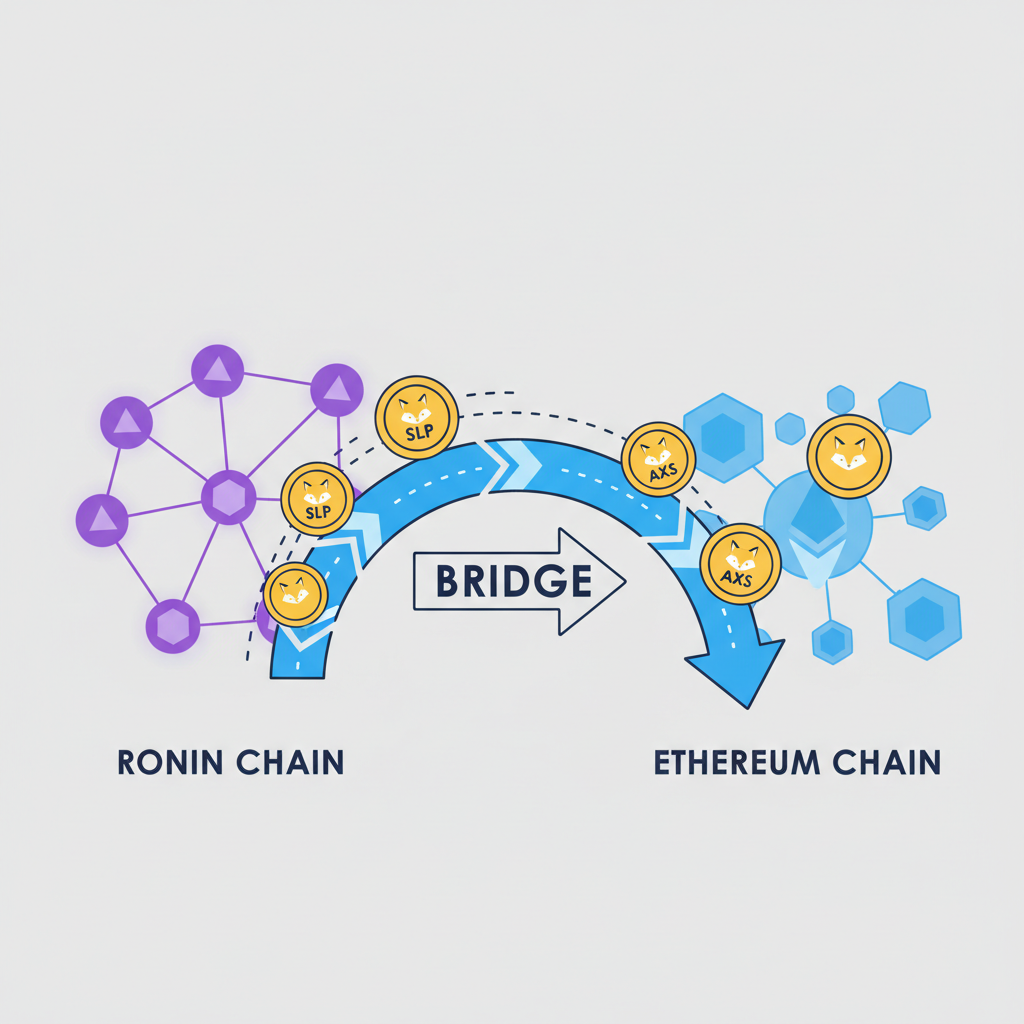
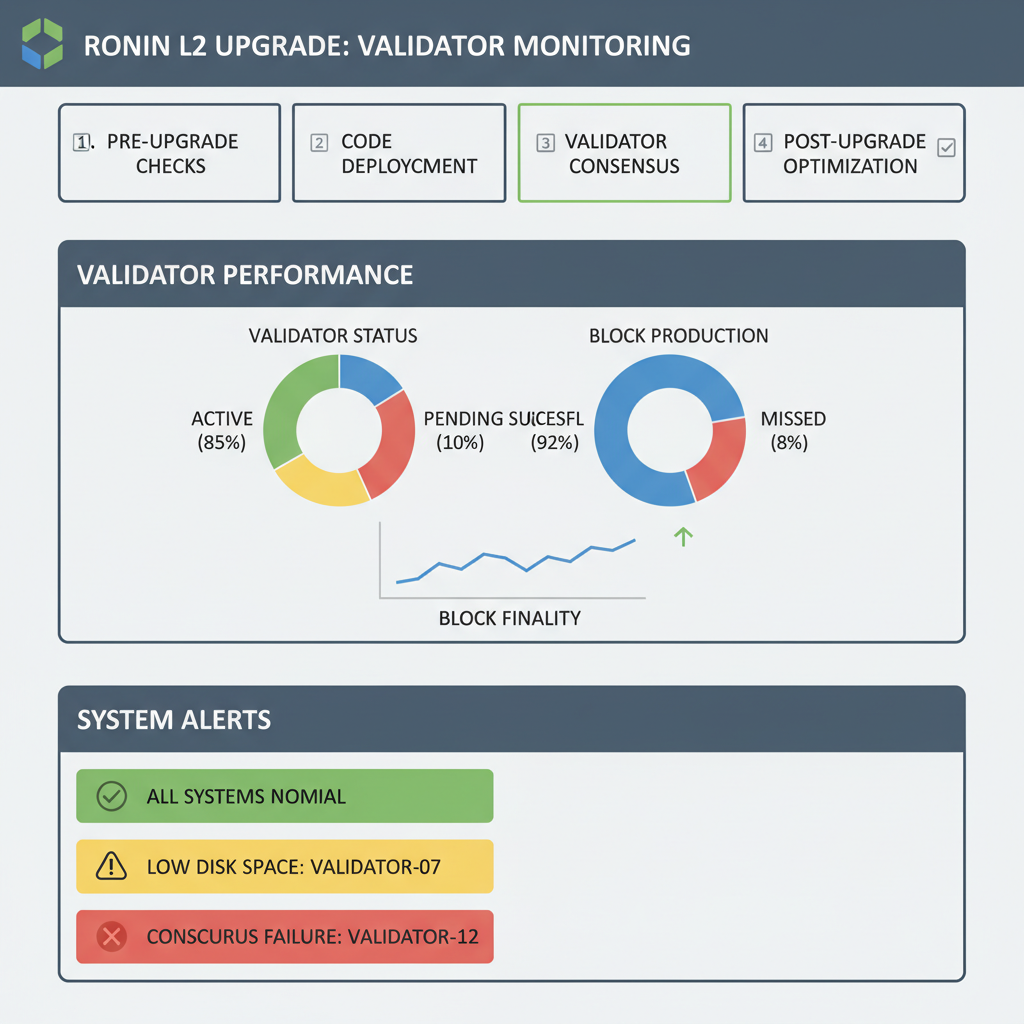
No frantic wallet swaps or asset bridges await users; Ronin's design ensures backward compatibility. Gamers continue Axie battles uninterrupted, with rollups silently batching transactions to Ethereum. Developers, however, should act now: Ronin Developer Console provides API endpoints for rollup simulations, easing ports from sidechain to L2.
In practice, this means auditing contracts for EVM equivalence, a non-trivial task given Ronin's gaming-specific optimizations. My quantitative lens flags this as the pivot risk: incomplete audits could spawn exploits, eroding trust. Yet, with Uniswap v3 eyeing deployment, liquidity bootstraps loom large, potentially elevating RON as a DeFi gas token.
Sky Mavis' engineering rigor, battle-tested by Axie Infinity's scale, instills confidence in execution.
Risks, Rewards, and Portfolio Positioning
Centralization shadows linger; Ronin's validator set, though battle-hardened, must decentralize further post-transition to match Ethereum's purity. L2 finality, per Ethereum Magicians' roadmap, hinges on shared sequencers - a vulnerability Ronin mitigates via phased proofs. Market-wise, AXS's $1.29 perch, down 0.77% daily, undervalues the ronin rollups axie infinity synergy amid Ethereum's resurgence.
Position conservatively: allocate 5-10% to AXS/RON in diversified Web3 baskets, hedging with ETH exposure. Upside catalysts include DeFi integrations and institutional gaming pilots; downsides, delays pushing into late 2026. Ronin's pivot exemplifies blockchain maturation - from gaming outlier to Ethereum cornerstone, rewarding patient capital.
As validators greenlight the hardfork, watch for Q4 2025 testnets signaling acceleration. This isn't hype revival; it's engineered scalability, fortifying Axie Infinity's legacy while inviting broader Web3 adoption. With Ethereum's base layer humming, Ronin's L2 ascent promises enduring velocity for gamers and yields for stakeholders alike.
| Milestone | Timeline | Impact |
|---|---|---|
| Validator Review | Now - Q4 2025 | Risk Assessment |
| Rollup Activation | Q1 2026 | Speed Gains |
| Full Alignment | Q2 2026 | DeFi Expansion |




No comments yet. Be the first to share your thoughts!