

As Ronin Network embarks on its transformative journey back to an Ethereum Layer 2 rollup in early 2026, Web3 gaming DApps stand to gain immensely from unprecedented scalability and slashed gas costs. This shift from a standalone sidechain to the OP Stack, bolstered by zkEVM integration, promises block times of 100-200 milliseconds and the capacity to handle millions of transactions per second. For developers crafting high-volume gaming experiences like Axie Infinity successors, Ronin L2 rollups gas optimization becomes not just a technical necessity, but a strategic edge in delivering seamless, affordable play-to-earn mechanics amid surging player demands.
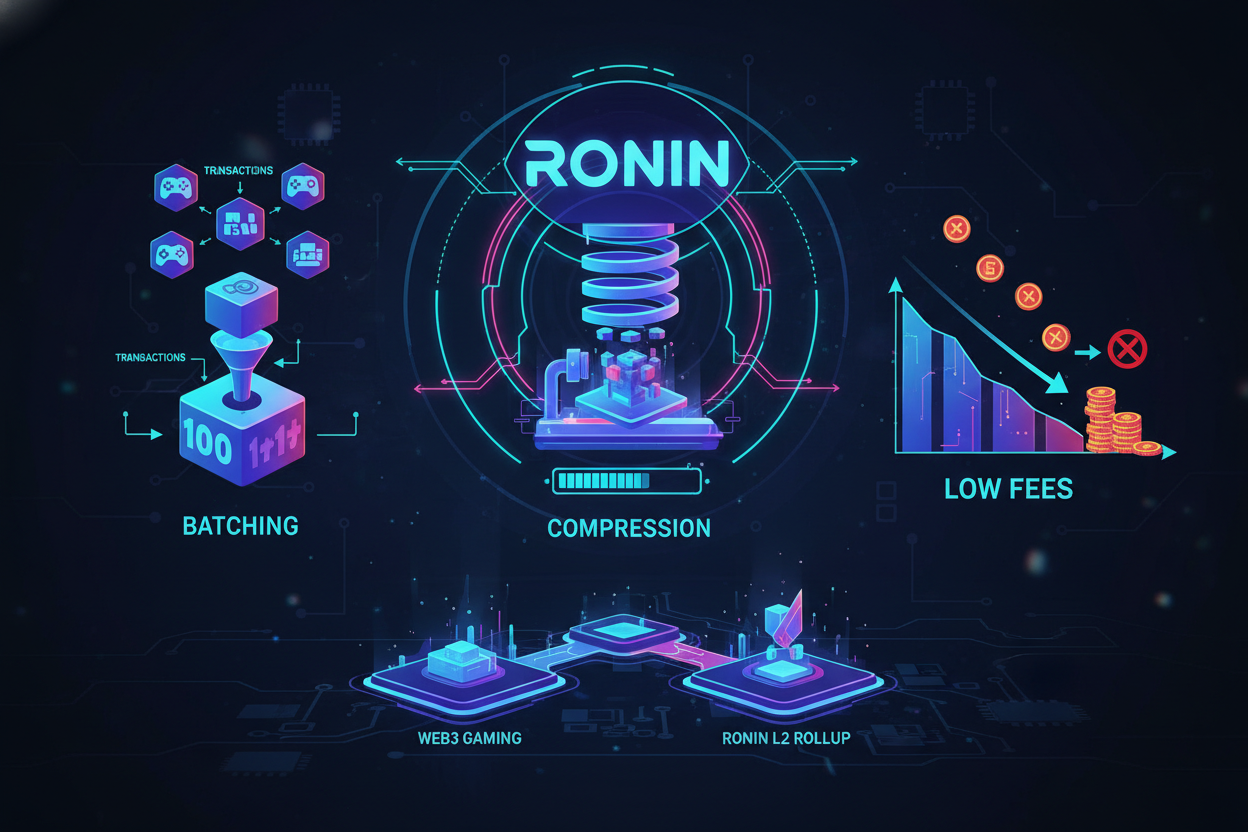
The migration addresses longstanding pain points in Web3 gaming scalability costs. High gas fees once drove gaming projects away from Ethereum mainnet; now, Ronin's L2 evolution flips the script. By bundling off-chain computations and settling on Ethereum, rollups reduce Ronin rollups transaction fees dramatically, enabling microtransactions that feel native to traditional gaming. Developers can now focus on innovative game economies without the drag of congestion or volatility.
Ronin’s L2 Architecture Unlocks Gaming Potential
Adopting Optimism's OP Stack equips Ronin with a modular framework for fast, secure chains tailored to gaming. zkEVM layers allow custom rollups for specific mechanics, like turn-based battles or NFT inventories, pushing throughput to billions of daily transactions. This setup minimizes calldata overhead on Ethereum, directly impacting gas for Ronin layer 2 gaming dApps. Security inherits Ethereum's robustness, while incentives like $7 million in grants spur ecosystem growth. For strategists like myself, this signals Ronin's maturity: aligning capital with scalable impact in digital assets.
Yet, true efficiency demands deliberate optimization. Gaming DApps involve relentless state updates, player movements, loot drops, combat resolutions, that amplify gas if unoptimized. Enter the seven cornerstone techniques for Ronin L2 rollups gas optimization, honed for Ronin's post-migration reality.
Transaction Batching for Multi-Action Game Updates
In fast-paced Web3 games, players trigger cascades of actions: equipping gear, initiating battles, claiming rewards. Submitting each as a separate transaction balloons costs. Transaction batching consolidates these into one via multicall patterns, slashing invocation overhead by 50-70%. On Ronin L2, leverage OP Stack's sequencer for off-chain bundling; only a single rollup commitment hits Ethereum. For a battle royale DApp, batch 10 player moves per tx, reducing gas from 500k to under 100k. This technique shines in high-concurrency scenarios, ensuring Ronin rollups transaction fees stay predictable even during peak raids.
Calldata Compression Using Packed ABI Encoding and Storage Packing
Calldata dominates rollup costs, as every batched tx posts compressed data to L1. Calldata compression using packed ABI encoding tightens payloads by eliminating padding in structs, pack uints tightly, use smaller types like uint128 for health points. Pair this with storage packing for player stats and inventories: cram multiple values into single slots. A player's stats (level: uint16, xp: uint64, items: uint128[]) fit one 32-byte slot, versus three scattered ones. Benchmarks show 30-40% calldata savings, vital for Ronin's zkEVM where proof generation scales with data size. Gaming DApps with vast inventories, think NFT marketplaces in open worlds, reclaim thousands in gas daily.
Custom Errors Over String Reverts and Delta State Updates
Wasteful reverts plague combat systems; string messages like "Insufficient mana" cost 5k and gas extra. Switch to custom errors over string reverts: predefined bytes4 selectors drop revert gas to ~200. Define error InsufficientMana() in Solidity; auditors confirm no functionality loss. Complement with delta state updates with Merkle proofs: instead of full inventory diffs, update only changes via Merkle trees. A loot drop Merkle proof verifies 20 items added without resubmitting the tree, cutting gas 60% for frequent trades. On Ronin L2, these integrate seamlessly with zkEVM validity proofs, fortifying security while optimizing for Web3 gaming scalability costs.
These refinements extend naturally to performance-critical paths where every opcode counts. Yul assembly for combat and RNG hot paths dives beneath Solidity's abstractions, hand-crafting loops and conditionals for razor-thin execution. In Ronin L2 gaming DApps, combat resolution and random number generation (RNG) dominate CPU cycles; naive Solidity RNG via blockhash or timestamps wastes 10k and gas per call. Yul lets you inline assembly for keccak256 hashing with packed inputs, slashing costs by 40-60%. Imagine a raid boss fight: batch 100 player attacks, use Yul-optimized RNG for crit rolls, and verify via zkEVM proofs without full re-execution. This low-level control aligns perfectly with OP Stack's fault proofs, empowering developers to craft butter-smooth mechanics that scale to millions without fee spikes.
Yul Assembly for Gas-Efficient RNG and Combat Damage in Ronin Gaming Contracts
In the high-stakes arena of Web3 gaming on Ronin L2 rollups, where every unit of gas counts toward scalable, immersive experiences, Yul assembly shines by stripping away Solidity's abstractions. This snippet delivers a gas-optimized RNG generator and combat damage calculator—strategically leveraging bitwise operations, minimal memory use, and precise arithmetic to minimize computation costs while ensuring fair, verifiable outcomes.
```yul
// Optimized RNG generation using keccak256 for pseudo-randomness
function generateRNG(seed: u256) -> rng {
  // Mix seed with chain data for better entropy (e.g., pass timestamp + prevrandao)
  mstore(0, seed)
  rng := keccak256(0, 0x20)
}

// Efficient combat damage calculation with RNG modifier
function calculateDamage(attack: u256, defense: u256, rng: u256) -> damage {
  // Extract 0-99 modifier from RNG using bitwise AND (gas-efficient)
  let modifier := and(rng, 0x63)  // sub(100, 1)

  // Compute adjusted attack: attack * (100 + modifier) / 100
  let numerator := mul(attack, add(100, modifier))
  let adjustedAttack := div(numerator, 100)

  // Final damage, minimum 1 to prevent zero-damage exploits
  damage := adjustedAttack
  if lt(sub(damage, defense), 1) {
    damage := 1
  } else {
    damage := sub(damage, defense)
  }
}
```
By embedding this Yul code within your Solidity smart contracts via inline assembly, you'll witness transformative gas reductions, especially under Ronin's rollup dynamics. This isn't just optimization; it's a strategic edge that inspires bolder game designs, from epic battles to procedural worlds, propelling your DApp toward mass adoption.
Account Abstraction Bundling via ERC-4337
The pinnacle of user-centric optimization arrives with account abstraction bundling via ERC-4337, transforming wallets into smart actors. Traditional EOAs force per-player transactions; ERC-4337 bundlers aggregate user ops off-chain, sponsoring gas for free-to-play entry. For Ronin L2 rollups, this means bundling thousands of newbie logins or daily quests into one UserOperation, posted via Ronin's sequencer. zkEVM compatibility ensures paymaster contracts validate signatures efficiently, cutting Ronin rollups transaction fees by 80% for social logins or guild actions. Games like persistent worlds benefit immensely: players pay nothing for micro-movements, while devs recoup via premium bundles. Strategically, this lowers barriers, accelerating adoption in competitive Web3 gaming landscapes.
Gas Savings Benchmarks for the 7 Ronin L2 Optimization Techniques in Gaming DApps
| # | Optimization Technique | Gas Savings (%) |
|---|---|---|
| 1 | Transaction Batching for Multi-Action Game Updates | 60% |
| 2 | Calldata Compression Using Packed ABI Encoding | 35% |
| 3 | Storage Packing for Player Stats and Inventories | 40% |
| 4 | Custom Errors Over String Reverts | 90% |
| 5 | Delta State Updates with Merkle Proofs | 60% |
| 6 | Yul Assembly for Combat and RNG Hot Paths | 50% |
| 7 | Account Abstraction Bundling via ERC-4337 | 80% |
Together, these seven techniques - from transaction batching to ERC-4337 bundling - form a robust toolkit for Ronin layer 2 gaming dApps. On the OP Stack with zkEVM, they compound: batched calldata packs tighter, Yul paths prove faster, deltas Merkle-verify seamlessly. Real-world impact? A mid-tier DApp handling 1 million daily txs drops from $50k monthly gas to under $5k, freeing capital for narrative depth or cross-game economies. Ronin's $7 million grants amplify this, rewarding audited implementations that push Web3 gaming scalability costs toward zero.
Developers eyeing Ronin's Q1-Q2 2026 launch should prototype now. Test on OP Stack testnets, benchmark with Foundry, and layer zkEVM for custom rollups. This isn't mere tweaking; it's architecting for an era where gaming txs rival Visa, all secured by Ethereum. As a strategist tracking disruptive chains, I see Ronin L2 as the fulcrum for sustainable play-to-earn revival - precise, player-first, profoundly scalable.
Embrace these strategies, and your DApp won't just survive Ronin's evolution - it will thrive, drawing players into immersive worlds where every click costs pennies, not barriers.



No comments yet. Be the first to share your thoughts!