

In March 2026, Ronin unveiled a transformative update to its economic model, introducing Proof-of-Distribution (PoD) as the cornerstone of its shift from passive staking rewards to targeted incentives for ecosystem builders. This move redirects resources previously locked in validator staking toward measurable contributions like Total Value Locked (TVL), gas consumption, user retention, and trading volume. At a time when RON trades at $0.0868, down 0.009860% over the last 24 hours with a high of $0.0885 and low of $0.0842, this reform signals Ronin's commitment to fueling growth in Web3 gaming and DeFi scalability.
The old system rewarded validators simply for holding stakes, which secured the network but often at the expense of broader adoption. Now, with roughly 90 million RON tokens moved from staking allocations to the treasury, Ronin can deploy 5 million RON annually through PoD. This isn't just a reallocation; it's a strategic pivot that aligns token economics with real network utility, potentially boosting Ronin network incentives and long-term holder value.
Decoding Proof-of-Distribution: Rewards for Real Impact
Proof-of-Distribution flips the script on traditional staking by channeling rewards to active builders - think dApp developers, liquidity providers, and protocols driving activity. Sources from Ronin Network's Town Hall and social channels describe it as reallocating from "passive validators" to those generating TVL, gas usage, retention, and volume. Sky Mavis, Ronin's steward, commits 100% of its PoD share to this pool, underscoring confidence in the model's efficacy.
Imagine a network where security is optimized without overpaying for idle capital. Ronin achieves this by trimming validator incentives while supercharging builders. The result? A leaner treasury that funds innovation directly. For developers eyeing Ronin L2 expansion, PoD lowers the barrier to entry, as rewards tie straight to on-chain performance rather than capital lockups.
The Four Metrics Powering Ronin PoD Rewards
PoD's strength lies in its concrete, quantifiable criteria. Here's how the 5 million RON distributes annually:
- TVL (Total Value Locked): Protocols locking the most assets get the biggest slice, incentivizing deep liquidity in DeFi and gaming pools.
- Gas Consumption: High usage signals active dApps; builders here earn for scaling transaction throughput on Ronin's rollup.
- User Retention: Steady daily active users (DAUs) over time reward sticky experiences, vital for Web3 gaming retention.
- Trading Volume: DEXs and markets with robust volume capture rewards, amplifying Ronin's trading ecosystem.
These metrics create a balanced scorecard, preventing any single factor from dominating. From my analysis bridging on-chain data with macro trends, this multi-metric approach mirrors successful L2 incentives like Optimism's but tailors them to Ronin's gaming heritage. Builders no longer chase vague airdrops; they optimize for verifiable growth.
Redirecting 90M RON: Treasury and Governance Evolution
The PoD launch accompanies a massive treasury infusion: 90 million RON shifted from staking, enabling sustainable 5 million RON yearly distributions. This frees capital for treasury repurchases, DeFi yields, and investments, all under a new token-weighted governance model. RON holders now vote proportionally to stakes, democratizing decisions that shape Ronin's trajectory.
Critically, this addresses over-reliance on validator economics. Ronin Docs highlight how staking once drove validator selection and rewards, but PoD evolves that into a builder-centric framework. At $0.0868, RON's modest dip amid this news suggests market digestion of the shift, yet the long-term setup looks primed for rebound as TVL and volume metrics climb.
Ronin (RON) Price Prediction 2027-2032
Forecasts factoring Proof-of-Distribution (PoD) rewards impact on TVL, gas retention, user retention, and trading volume growth amid market cycles
| Year | Minimum Price | Average Price | Maximum Price |
|---|---|---|---|
| 2027 | $0.12 | $0.28 | $0.65 |
| 2028 | $0.22 | $0.55 | $1.40 |
| 2029 | $0.38 | $0.95 | $2.60 |
| 2030 | $0.55 | $1.45 | $4.20 |
| 2031 | $0.80 | $2.10 | $6.50 |
| 2032 | $1.10 | $3.00 | $9.00 |
Price Prediction Summary
Ronin (RON) is expected to experience substantial growth from 2027-2032, starting from its 2026 baseline of ~$0.087, propelled by the PoD system's 5M annual RON rewards to builders. This incentivizes TVL and volume expansion, potentially driving average prices from $0.28 in 2027 to $3.00 by 2032 in bullish adoption scenarios, with min/max reflecting bearish market corrections and peak bull runs.
Key Factors Affecting Ronin Price
- Proof-of-Distribution (PoD) reallocating 5M RON/year to builders based on TVL, gas usage, retention, and volume, boosting network activity.
- Transition to token-weighted governance and treasury optimization for buybacks/DeFi.
- Crypto market cycles: Bullish phases in 2028-2029 and 2032 tied to halvings/adoption.
- Gaming and DeFi expansion on Ronin (e.g., Axie ecosystem) amid L2 competition.
- Regulatory developments favoring clear rules; macro factors like interest rates.
- Technical improvements in scalability and interoperability enhancing use cases.
Disclaimer: Cryptocurrency price predictions are speculative and based on current market analysis. Actual prices may vary significantly due to market volatility, regulatory changes, and other factors. Always do your own research before making investment decisions.
Early signals from community discussions, like Boss Kookoo's review, buzz with optimism over these Ronin TVL rewards and gas usage incentives. Builders stand to gain disproportionately, potentially accelerating Ronin L2's dominance in high-throughput gaming chains.
Builders eyeing ronin web3 gaming scaling should prioritize hybrid strategies: stack TVL in gaming liquidity pools while optimizing smart contracts for gas efficiency. Protocols blending DeFi with play-to-earn mechanics, like those on Ronin's Universal Questing Layer, could dominate early distributions. This targeted approach sidesteps the pitfalls of broad airdrops, fostering sustainable growth over hype cycles.
Sky Mavis's Commitment: 100% PoD Alignment
Sky Mavis isn't just announcing changes; they're all-in. Town Hall recaps confirm 100% of their Proof-of-Distribution allocation funnels back into the 5 million RON pool, signaling ironclad backing for builders. This move reduces perceived centralization risks, as treasury decisions shift to token-weighted votes. Holders with even modest RON stakes gain influence over repurchases or DeFi deployments, a refreshing evolution from top-down models.
From an analyst's lens, this treasury pivot - 90 million RON unlocked - positions Ronin like a venture fund for its own ecosystem. Pair it with metrics tracking real usage, and you've got a flywheel: more activity draws rewards, which spurs innovation, lifting TVL and volume in tandem. At $0.0868, RON reflects cautious trading post-announcement, but underlying metrics hint at upside as builders mobilize.
Maximizing Ronin PoD: Actionable Steps for Builders
To capture ronin pod rewards, focus on data-driven optimization. Monitor dashboards for TVL rankings, audit gas patterns via Ronin explorers, and A/B test retention hooks in gaming UIs. Transaction volume thrives on seamless DEX integrations, so liquidity mining with low-slippage pairs pays off quickest.
Maximize Ronin PoD Rewards
- 1. Optimize TVL: Build deep liquidity pools on DEXs like Koi Finance to lock more value on Ronin.
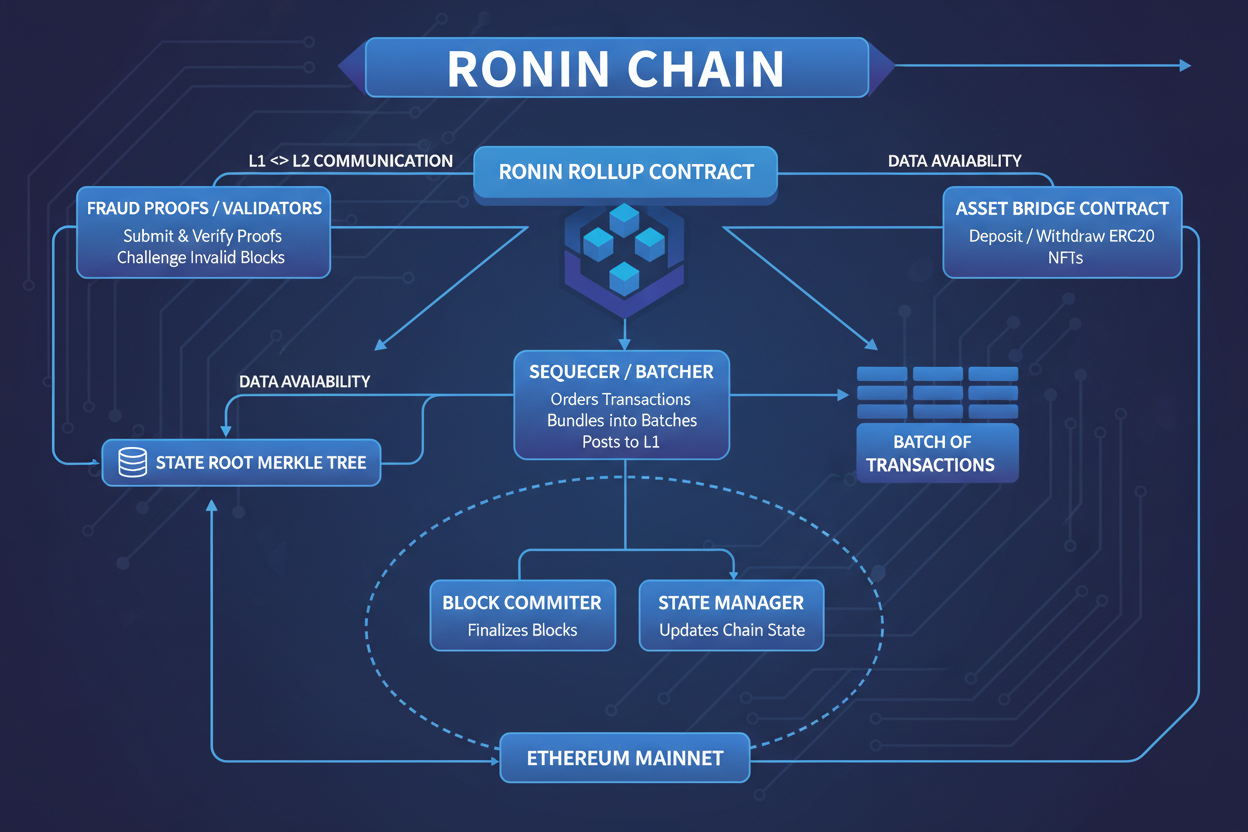
- 2. Boost Gas Usage: Deploy efficient rollup contracts to enable high-throughput dApps and increase total gas consumption.
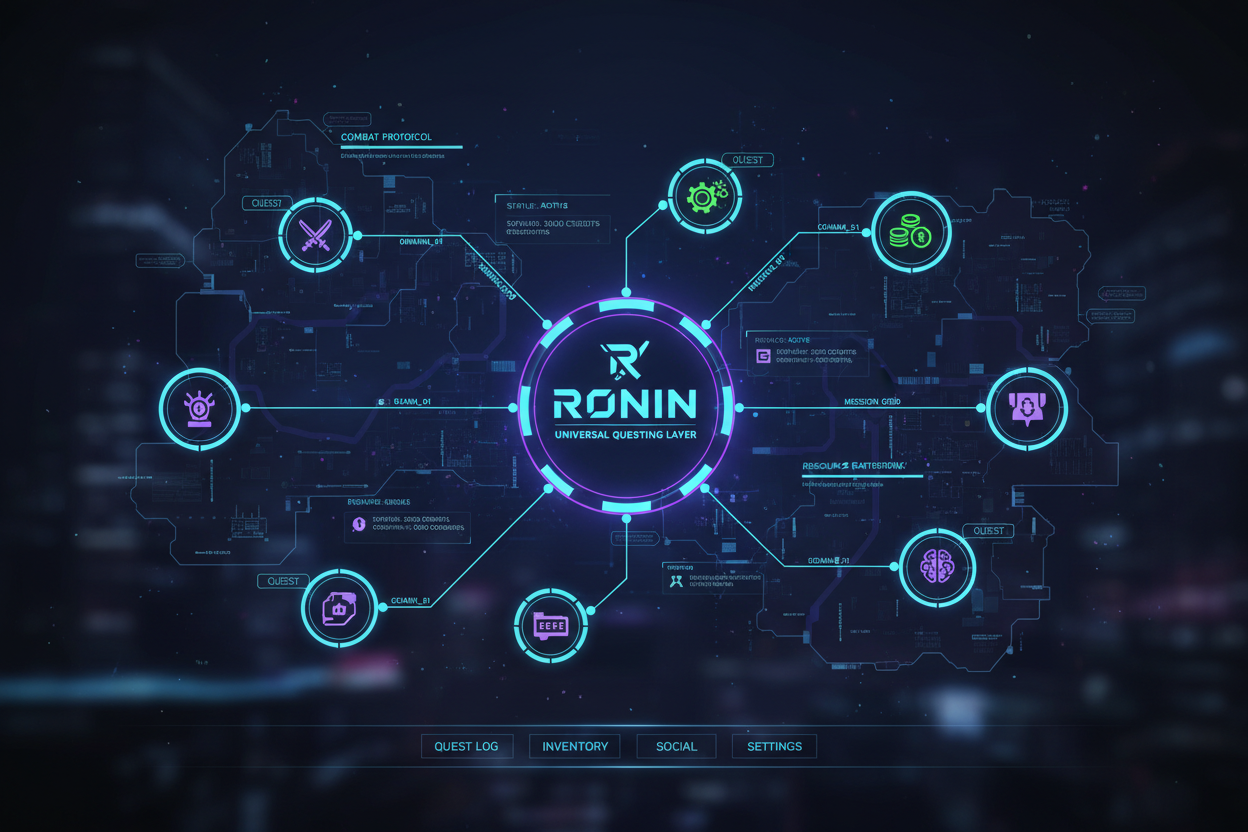
- 3. Enhance Retention: Integrate questing mechanics via Ronin's Universal Questing Layer to keep users engaged.
- 4. Drive Volume: Launch DEX incentives on platforms like Koi Finance to spur trading activity.
These aren't abstract ideals; they're executable plays. My models project top protocols could claim 20-30% of the annual pool within quarters, assuming coordinated efforts. For Web3 gaming devs, Ronin's L2 edge - sub-cent fees at scale - amplifies every ronin gas usage rewards dollar earned.
Governance adds another layer. Token-weighted voting means staked RON translates to sway on treasury spends, like buying back at dips around $0.0868 or seeding high-potential dApps. This empowers retail holders alongside whales, balancing decentralization with expertise.
Long-Term Horizon: Ronin's Economic Flywheel
Zoom out, and PoD forms a self-reinforcing loop. Higher TVL stabilizes RON utility; gas and volume metrics underscore scalability, drawing more builders; retention cements user loyalty in gaming's churn-prone world. Redirected staking funds ensure multi-year runway without inflation spikes.
Compare to legacy L2s: Ronin tailors incentives to its gaming DNA, where ronin retention rewards matter most. Community chatter on platforms like Facebook echoes this, with creators dissecting metrics in real-time. As adoption compounds, expect RON to decouple from broad market noise, rewarding network-specific bets.
Ronin Network's evolution underscores a broader truth in crypto: incentives win wars. By prioritizing builders over passive holders, PoD equips Ronin to scale Web3 gaming without compromising security. With RON steady at $0.0868 amid 24-hour flux between $0.0842 and $0.0885, patient positions here blend yield potential with governance heft. Developers and holders alike stand to thrive in this recalibrated ecosystem.




No comments yet. Be the first to share your thoughts!