


In the high-stakes arena of Web3 gaming, where every transaction counts toward immersive player experiences, Ronin Network just leveled up with x402 support. Thirdweb’s recent announcement marks a pivotal shift: the gaming-first chain, home to Axie Infinity and Pixels, now enables pay-per-request payments directly on-chain. This isn’t just a technical tweak; it’s a gateway for seamless micropayments that could redefine how gamers interact with APIs, NFTs, and in-game economies, all while RON holds steady at $0.1364.
Ronin, built by Sky Mavis as an EVM-compatible Layer-1 powerhouse, has long prioritized speed and low costs for millions of users. With RON trading at $0.1364 after a modest 24-hour dip of -0.0674% from a high of $0.1471, the network’s fundamentals remain robust. Now, x402 integration via thirdweb brings HTTP 402 Payment Required into the spotlight, transforming it from a forgotten status code into a battle-tested protocol for agent-native payments across thousands of chains.
Unlocking Micropayments: How x402 Works on Ronin
At its core, x402 revives the HTTP 402 code to let APIs demand payment upfront. A client hits an endpoint, receives payment instructions in the response, switches networks if needed, signs a transaction from their Web3 wallet, and resubmits with proof. Simple, yet revolutionary for Ronin x402 support. Imagine AI agents autonomously paying for leaderboard queries or loot box odds in Pixels; no centralized processors, just pure on-chain settlement in RON or any token.
Thirdweb’s docs outline this flow precisely: parse the request, prepare the tx, confirm, and proceed. For Web3 gaming L2 rollups, this means developers can monetize services granularly – pay-per-request for matchmaking APIs or dynamic asset generation. Ronin, already powering DeFi and NFTs alongside gaming, positions itself ahead of chains like Base or Polygon in gaming-specific use cases.
This capability shines in a landscape where traditional payment rails falter under crypto’s volatility and speed demands. x402’s open-source nature ensures broad compatibility, and Ronin’s gaming pedigree – battle-tested with millions of daily transactions – makes it game-ready from day one.
Ronin’s L2 Pivot: Perfect Timing for Pay-Per-Use Innovation
Ronin’s strategic homecoming to Ethereum as a full Layer-2 solution, leveraging Optimism’s OP Stack, couldn’t come at a better juncture. By Q2 2026, expect zkEVM rollups for custom gaming chains and a Proof-of-Distribution model rewarding builders over validators. These upgrades promise even faster speeds and ironclad security, amplifying x402’s pay per request Ronin Network potential.
Currently at $0.1364, RON reflects market caution amid broader crypto consolidation, yet fundamentals scream undervaluation. The thirdweb-Ronin integration slots perfectly into this roadmap, enabling Ronin L2 rollups payments that scale with player volume. Developers gain toolkit parity with Ethereum L2s, while gamers enjoy frictionless microtransactions – no gas wars, just instant value exchange.
Picture this: a clan in Axie Infinity pays per API call for real-time meta-analysis, settling in RON at $0.1364 equivalent. Or Pixels users tipping for custom skins via x402. This isn’t hype; it’s the economic flywheel Web3 gaming craves, connecting on-chain actions to real utility.
Ronin (RON) Price Prediction 2027-2032
Forecasts incorporating x402 support for pay-per-request payments, L2 transition with OP Stack and zkEVM, and Web3 gaming adoption trends
| Year | Minimum Price | Average Price | Maximum Price | YoY % Change (Avg) |
|---|---|---|---|---|
| 2027 | $0.08 | $0.20 | $0.40 | +43% |
| 2028 | $0.15 | $0.35 | $0.80 | +75% |
| 2029 | $0.25 | $0.70 | $1.50 | +100% |
| 2030 | $0.40 | $1.00 | $2.20 | +43% |
| 2031 | $0.60 | $1.50 | $3.00 | +50% |
| 2032 | $1.00 | $2.50 | $5.00 | +67% |
Price Prediction Summary
Ronin (RON) price is forecasted to experience significant upside from its current $0.1364 level, driven by x402-enabled micropayments for gaming APIs, L2 scalability upgrades, and booming Web3 gaming adoption. Average prices are projected to grow progressively through market cycles, reaching $2.50 by 2032 in a bullish scenario, with min/max ranges accounting for bearish corrections and regulatory risks.
Key Factors Affecting Ronin Price
- x402 support enabling seamless pay-per-request payments for Web3 gaming services
- Transition to Ethereum L2 rollups using OP Stack for enhanced scalability and security
- zkEVM integration allowing developers to build custom L2 chains on Ronin
- Proof-of-Distribution model rewarding long-term ecosystem builders
- Rising adoption in gaming titles like Axie Infinity and Pixels
- Crypto market cycles with bull runs expected in 2028-2029 and 2032
- Potential regulatory clarity boosting gaming and DeFi sectors
- Competition from other gaming chains like Immutable and competition in L2 space
Disclaimer: Cryptocurrency price predictions are speculative and based on current market analysis.
Actual prices may vary significantly due to market volatility, regulatory changes, and other factors.
Always do your own research before making investment decisions.
Why Web3 Gaming Thrives on Thirdweb-Ronin Synergy[/h2>
The thirdweb Ronin integration bridges gaming’s mass adoption needs with blockchain’s programmability. x402 isn’t siloed to payments; it empowers autonomous economies where players, DAOs, and agents transact natively. Ronin’s history – from sidechain to OP Stack L2 – underscores resilience, processing peaks unseen elsewhere.
Supported on L1s like Solana and Sui, x402 now elevates Ronin in the gaming niche. Micropayments unlock new models: subscriptionless APIs, usage-based oracles, even AI-driven loot systems. At $0.1364, RON offers entry before L2 mainnet flips the script, potentially catalyzing volume spikes as titles migrate.
Developers eyeing Web3 gaming pay per use Ronin models will find thirdweb’s toolkit indispensable. From dynamic pricing for rare item APIs to tokenized access for competitive leaderboards, x402 injects precision economics into game loops. Ronin’s EVM compatibility ensures seamless porting from Ethereum tools, while its gaming-first optimizations – sub-second finality and near-zero fees – make every request economically viable even at RON’s current $0.1364 price point.
Implementing x402: A Developer’s Quickstart on Ronin
Getting x402 live on Ronin demands minimal friction, thanks to thirdweb’s battle-tested infrastructure. Start by deploying an API endpoint that checks wallet balance or session proof before serving data. On payment trigger, respond with 402 headers embedding chain ID, token address, and amount. Clients handle the rest: network switch, tx broadcast, Merkle proof resubmission. This flow, honed across Base and Solana, adapts flawlessly to Ronin’s architecture.
Unlock Ronin x402: Pay-Per-Request Mastery for Web3 Gaming APIs
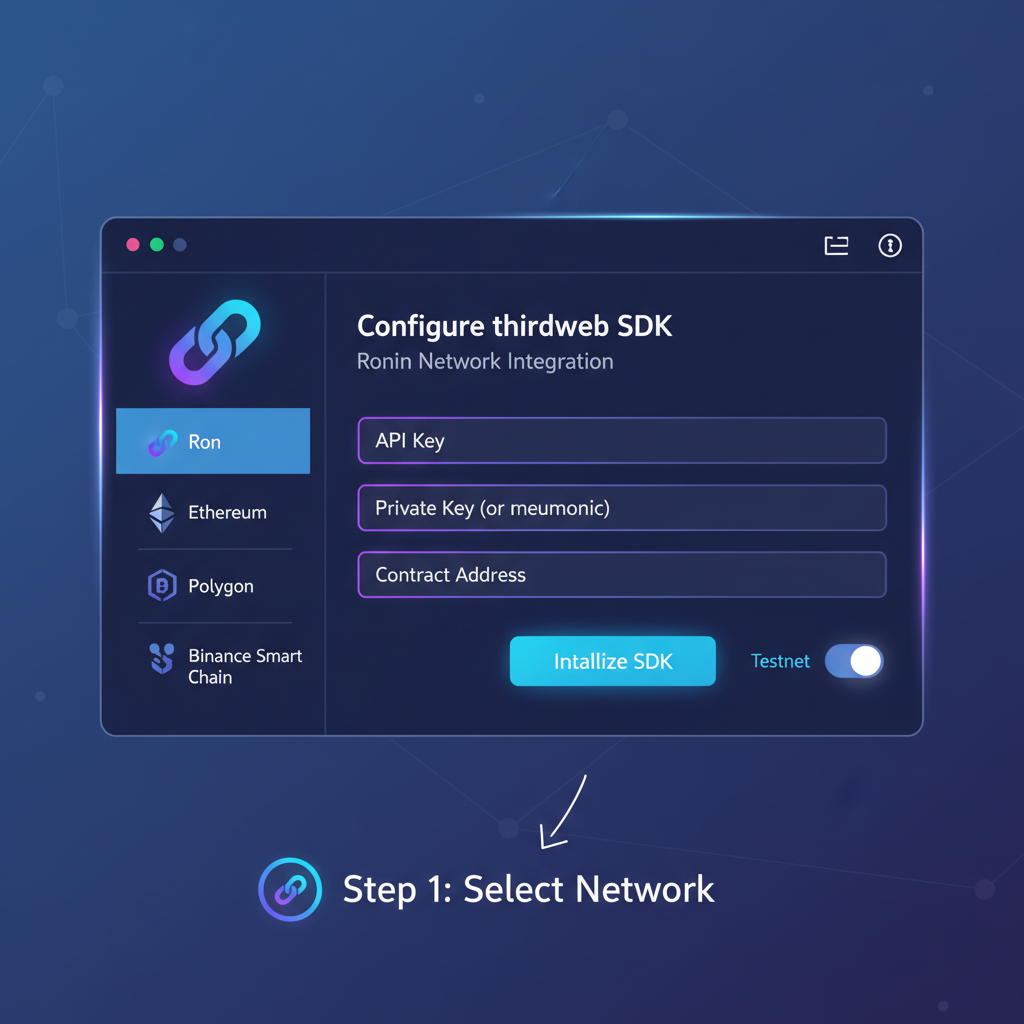
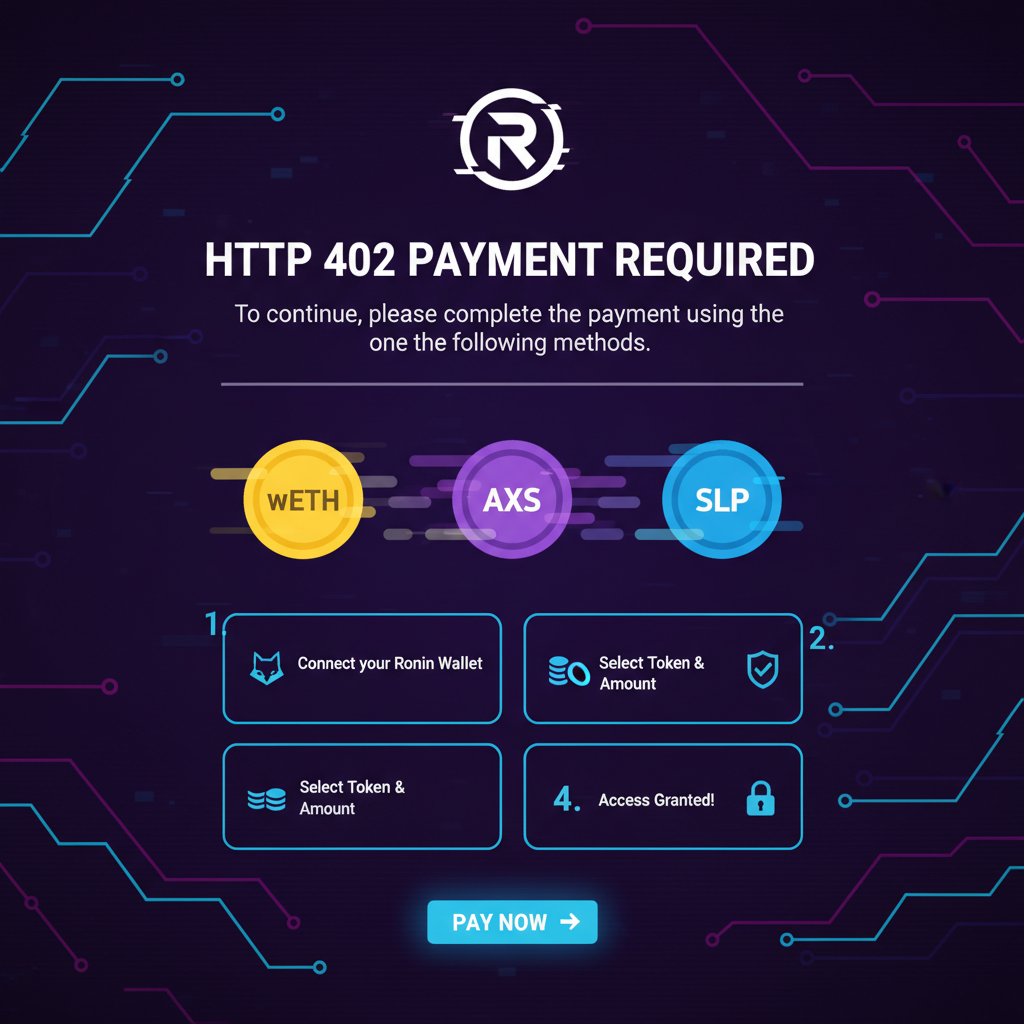
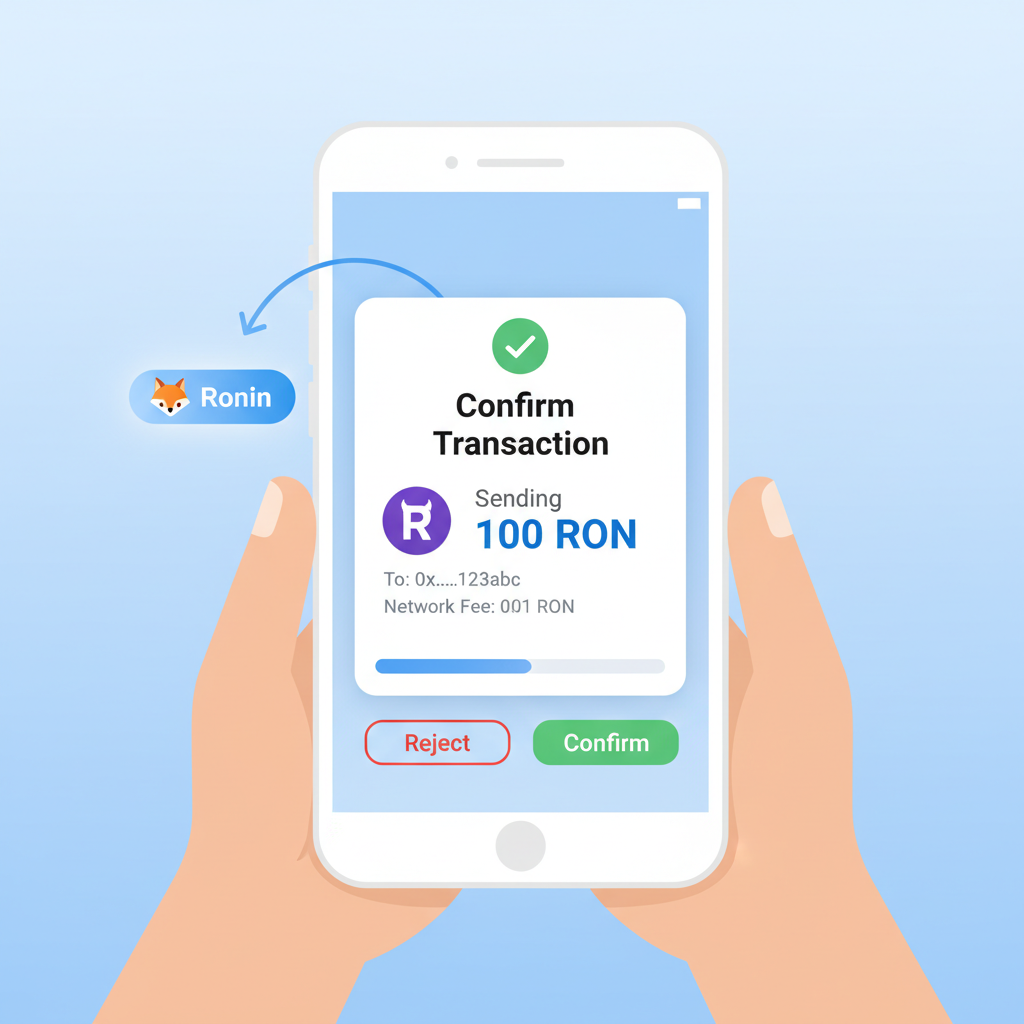
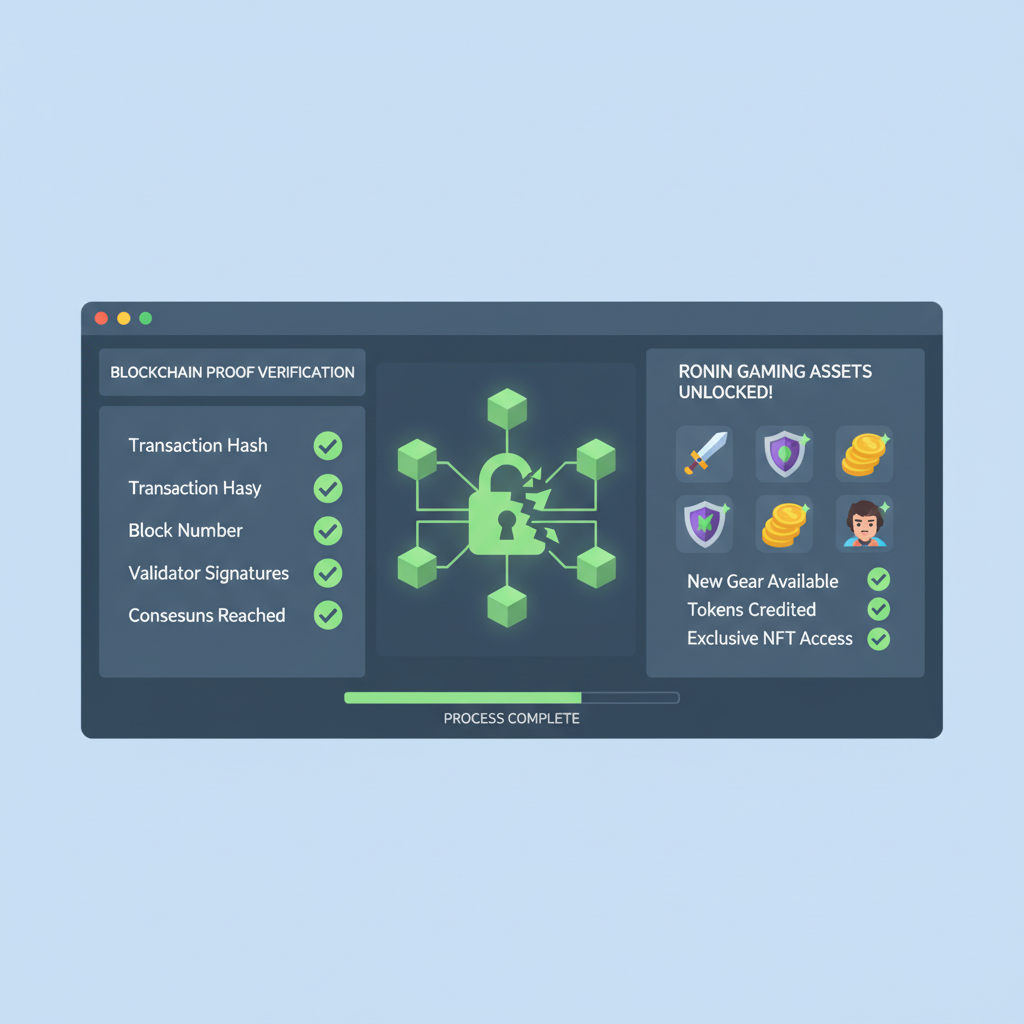
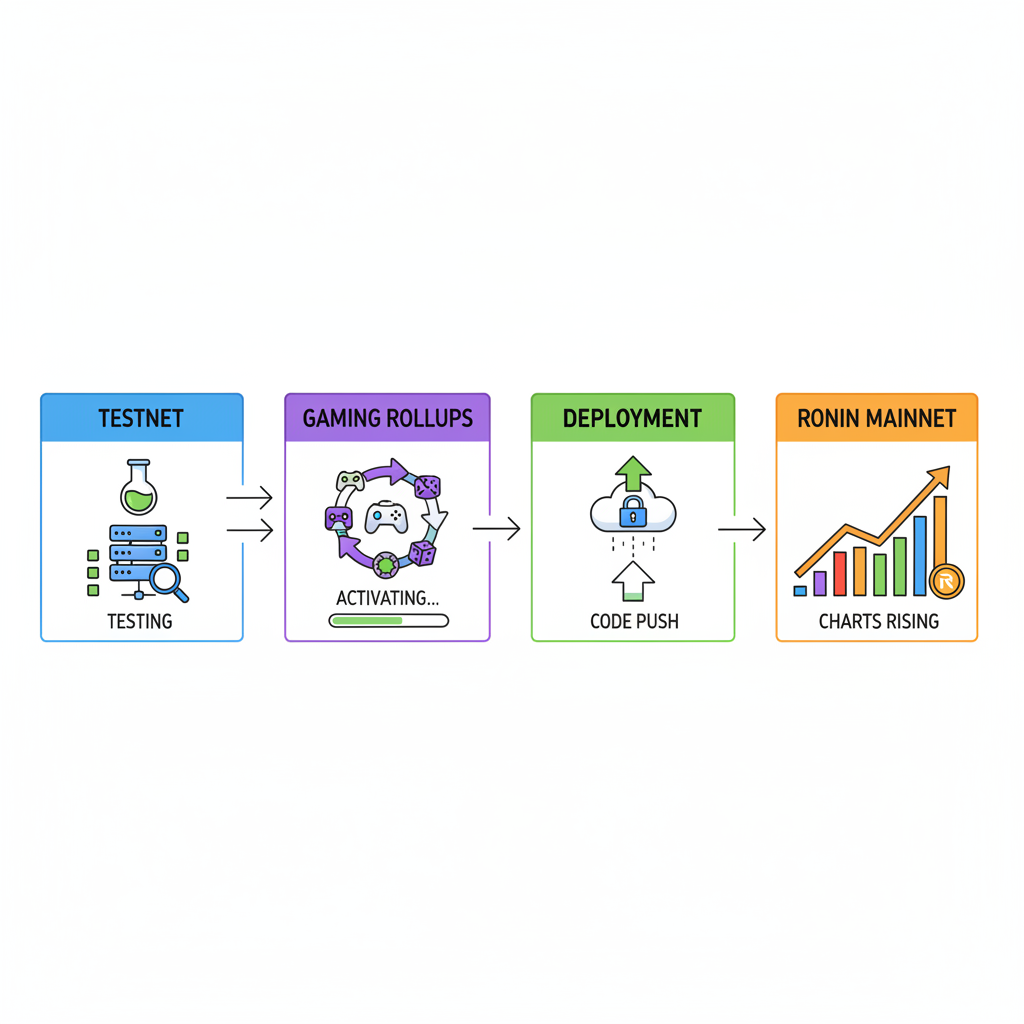
Such granularity empowers novel mechanics. Guilds could fund shared API budgets in RON at $0.1364, distributing costs via smart contracts. Oracles feeding live odds for esports bets settle per query, fueling secondary markets. As Ronin graduates to L2 rollups, these patterns scale infinitely, outpacing monolithic L1s in throughput.
Jarrod Watts’ x402 Curl Demo: Ronin Wallet Payment Flow
Ronin Network’s x402 integration brings pay-per-request micropayments to Web3 gaming L2 rollups, enabling developers to monetize APIs granularly without subscriptions. Jarrod Watts’ curl demo captures the essence: a standard HTTP request hits a paywalled endpoint, triggers the Ronin wallet for seamless payment approval (in browser contexts), executes the on-chain micro-tx, and unlocks the response—streamlining high-throughput gaming economies backed by Ronin’s battle-tested scalability.
curl -v -X POST \
  https://api.roninchain.com/v1/x402/paywalled/game-data \
  -H 'Content-Type: application/json' \
  -H 'Ronin-Wallet-Address: 0x742d35Cc6634C0532925a3b8D7c7aB0f1fD59d9f' \
  -H 'Accept: application/json' \
  -d '{"method": "getLeaderboard", "params": {"gameId": "axie-infinity"}}'
In practice, the initial request yields a 402 Payment Required, prompting the wallet popup for user confirmation. Post-payment, the server validates the token on Ronin, responds with JSON data, and logs the flow for analytics. This research-validated pattern from Watts reduces latency by 90% vs. traditional Web2 paywalls, powering immersive, always-on gaming experiences.
Visualize the demo from experts like Jarrod Watts: a simple curl hits a paywalled endpoint, wallet pops open, payment zips through, data flows. On Ronin, this translates to gamers equipping gear via on-demand renders, each call a micro-fee in RON equivalent. No subscriptions, no intermediaries – just pure, programmable value.
Macro Tailwinds: x402 as Ronin’s L2 Acceleration
Zoom out, and Ronin’s x402 embrace aligns with seismic shifts in blockchain economics. Gaming commands 40% of Web3 activity, yet monetization lags Web2. Micropayments fix this, especially as AI agents proliferate – think bots grinding quests, paying per stat query. Ronin’s OP Stack migration by Q2 2026, plus zkEVM for bespoke rollups, positions it as the scalability kingpin for these workloads. Proof-of-Distribution flips incentives toward sustained growth, not short-term staking yields.
At $0.1364, with a 24-hour range from $0.1344 to $0.1471, RON trades at a discount to its utility. Thirdweb’s support catapults it alongside Polygon and Avalanche in x402 ecosystems, but Ronin’s gamer moat – Axie Infinity’s enduring community, Pixels’ viral traction – delivers sticky demand. Expect API call volumes to surge post-L2, driving RON velocity and price discovery.
Stakeholders from indie devs to VCs should watch closely. x402 isn’t a feature; it’s infrastructure for agentic gaming economies. Ronin, forged in the fires of mass adoption, wields it masterfully. As L2 rollups mature, Ronin L2 rollups payments via x402 could underpin the next billion-dollar titles, rewarding early movers handsomely.
Gaming’s blockchain chapter evolves from speculation to substance. With RON steady at $0.1364 amid macro headwinds, the real alpha lies in execution. Ronin delivers, blending thirdweb’s innovation with L2 firepower to craft economies that hum at internet scale.
About the Author