
The Ronin Network’s strategic migration from a sidechain to an Ethereum Layer 2 (L2) solution through the adoption of Optimism’s OP Stack marks a significant inflection point for both developers and the broader Web3 ecosystem. With Ronin (RON) currently trading at $0.3080, this transition is not just a technical upgrade but a repositioning of Ronin as a competitive, scalable, and developer-friendly platform for decentralized applications, especially in the gaming sector.
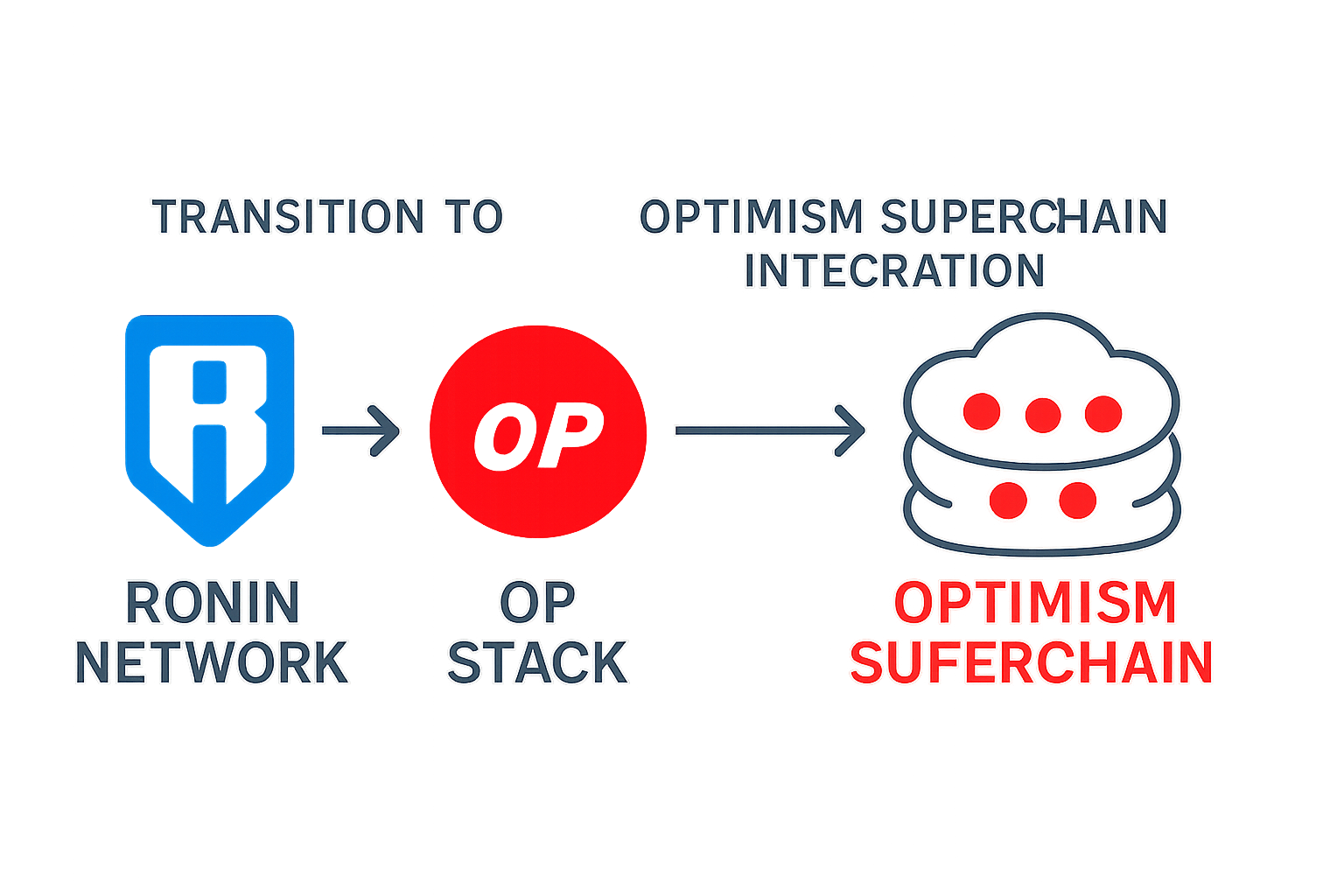
Why Ronin Chose the OP Stack: Technical and Strategic Rationale
Ronin’s embrace of the OP Stack is more than a buzzword play. The OP Stack, maintained by the Optimism Collective, is rapidly becoming the industry standard for modular blockchain development. By leveraging this open-source framework, Ronin positions itself within Optimism’s Superchain: a federated network of L2s that share security, liquidity, and infrastructure.
This move solves two core pain points: scalability and security. With block times now between 100 to 200 milliseconds and throughput targets up to 1 million transactions per second, Ronin can accommodate high-volume gaming activity without compromising on user experience or transaction finality. Just as crucially, inheriting Ethereum’s security model directly addresses past vulnerabilities that plagued sidechains.
The integration also unlocks access to shared innovation across Superchain participants like Base and Unichain, meaning developers can build with confidence that their dApps will be interoperable across an expanding universe of Ethereum L2 solutions.
Developer Incentives: Grants, Retro Funding, and Ecosystem Resources
The economic incentives for building on Ronin have never been stronger. The transition to an OP Stack-powered L2 unlocks up to $7 million in milestone-based grants, sourced from the Optimism Foundation, Eigen Labs, Boundless, and others. For ambitious teams seeking funding for innovative projects or infrastructure tools within the Ronin ecosystem, this is a material opportunity.
Moreover, developers are now eligible for allocations from Optimism’s $850 million OP Retro Fund, which rewards impactful projects contributing to the broader Superchain ecosystem. These incentives go beyond mere capital injection, they catalyze network effects by attracting top-tier talent and encouraging open-source collaboration.
Critically, all existing dApps can continue using $RON as their gas token. This ensures continuity for users while providing a familiar interface for teams migrating or expanding their offerings onto L2.
Building on Ronin L2: Accessing Tools and Superchain Interoperability
The developer experience is front-and-center in this upgrade cycle. By adopting the OP Stack architecture, Ronin now supports a suite of shared infrastructure components, block explorers, indexers, oracles, that dramatically streamline development workflows. Open-source tooling reduces friction when deploying smart contracts or integrating with third-party services.
Perhaps most transformative is seamless interoperability with other Superchain L2s. This means assets and data can flow freely between networks like Base or Unichain using standardized bridging protocols, a critical feature for cross-chain games or applications targeting multi-network user bases.
For hands-on guidance and technical documentation tailored to these new capabilities, developers should reference official resources such as:
- Ronin Network's Transition Guide: OP Stack Upgrade Details
- Technical Deep Dive: Achieving 1M TPS with OP Stack and EigenDA
This robust support ecosystem ensures that both new builders and established studios have what they need to innovate quickly on Ronin L2.
As Ronin’s upgrade unfolds, the implications for the broader Web3 gaming and dApp landscape are profound. The network’s new architecture is purpose-built for high-throughput, low-latency environments, precisely what next-generation games and interactive experiences demand. The current RON price of $0.3080 reflects renewed market confidence as developers and investors anticipate a surge in ecosystem activity fueled by these technical and economic tailwinds.
Access to Optimism’s Superchain is more than a technical checkbox; it’s a paradigm shift in how blockchains collaborate. Developers can now deploy applications that interact natively with assets and users across multiple L2s, unlocking composability at scale. For studios building cross-chain games or DeFi protocols, this means lower integration costs and faster go-to-market timelines.
Best Practices for Teams Migrating or Launching on Ronin L2
To maximize the value of Ronin’s OP Stack integration, developers should:
- Leverage Open-Source Tooling: Utilize OP Stack SDKs, block explorers, and indexers to accelerate development cycles.
- Pursue Ecosystem Grants: Apply early for milestone-based funding to support product launches or infrastructure buildouts.
- Design for Interoperability: Architect smart contracts with cross-chain functionality in mind from day one.
- Engage with Community Support: Join Ronin’s Discord or contact developersupport@skymavis. com for integration help or troubleshooting.
- Monitor Network Metrics: Track performance improvements as block times stabilize between 100,200ms and throughput scales toward 1 million TPS.
The migration also preserves continuity: existing projects can continue using $RON as their gas token, minimizing friction for current users while onboarding new ones from the broader Ethereum ecosystem. This combination of stability and forward-compatibility is rare among L2 migrations, and a key reason why Ronin is poised to attract both indie teams and major studios alike.
What’s Next? Scaling Web3 Gaming on Ronin
The real test will be in execution: how quickly can developers harness these upgrades to deliver breakout titles or DeFi products? Given the streamlined onboarding, generous grant programs, and robust shared tooling now available, early signs point toward an acceleration of innovation throughout 2025. Teams that move swiftly will be best positioned to capture market share as user demand shifts toward scalable, low-fee gaming experiences on Ethereum L2s.
The migration also sets a precedent for other application-specific chains considering similar moves, demonstrating that aligning with open standards like the OP Stack can unlock both technical excellence and deep liquidity via Superchain interoperability.
The bottom line: By integrating Optimism’s OP Stack at this pivotal moment, and with RON trading at $0.3080, Ronin Network is not just keeping pace with Ethereum scaling trends; it’s actively shaping them.
If you’re ready to build on an L2 designed for speed, security, and composability, now is the time to explore what Ronin offers next. For further reading on technical specifics or migration strategies, see our guides linked above, and stay tuned as this new chapter in blockchain scalability unfolds across the Superchain era.


No comments yet. Be the first to share your thoughts!