
Ronin daily active users hit two million
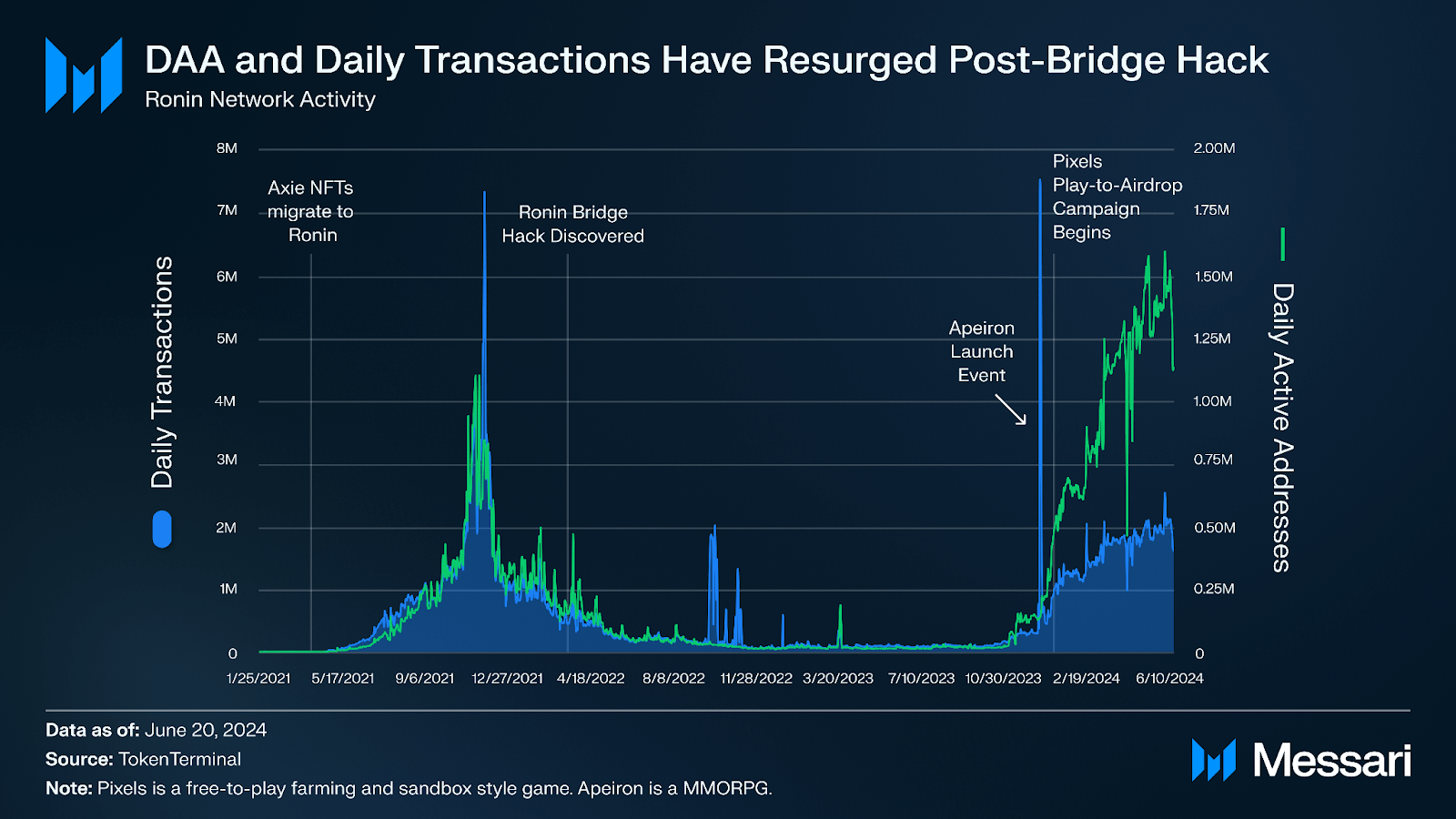
Ronin Network reached a significant operational milestone in July 2026, recording two million daily active users (DAU). This figure, verified by Token Terminal, positions Ronin as the leading blockchain by active user count, surpassing major competitors including Tron and Solana. The achievement underscores the network's capacity to sustain high-volume transactional activity within the Web3 gaming sector.
The user growth coincides with Ronin's strategic migration to the OP-Stack framework. By transitioning from an independent sidechain to a full Ethereum Layer 2, the network aimed to improve security and interoperability without sacrificing the throughput required for complex in-game economies. Historical data confirms that the network had already established a robust user base before the technical upgrade.
This scale of adoption highlights the unique dynamics of blockchain gaming. Unlike general-purpose blockchains where user activity often fluctuates with speculative trading, Ronin's activity is driven by persistent digital engagement. As the only blockchain proven to scale a single game to millions of daily active users, Ronin demonstrates that utility-driven networks can outperform those reliant primarily on financial speculation.
Ethereum L2 Migration Completes
Ronin executed a hard fork that ended its operation as a standalone sidechain, transitioning fully to an Optimism Stack (OP-Stack) Layer 2 on Ethereum. This structural shift moves Ronin from an isolated network with limited security guarantees to a system anchored by Ethereum’s consensus layer. The migration was not merely a technical upgrade but a fundamental change in how the network validates transactions and secures assets.
The move to OP-Stack provides immediate interoperability with the broader Ethereum ecosystem. Assets and smart contracts on Ronin can now interact with Ethereum-based decentralized applications (dApps) through standard bridging protocols, reducing the friction that previously existed between the gaming chain and the wider Web3 economy. This alignment allows developers to leverage Ethereum’s liquidity and security without sacrificing the low-cost, high-speed environment required for gaming.
From a regulatory and legal standpoint, this migration clarifies the liability and compliance landscape. As an Ethereum L2, Ronin’s operations are increasingly viewed through the lens of Ethereum’s existing legal precedents and regulatory frameworks. This integration may simplify compliance for enterprises and users who were previously hesitant to engage with a closed-loop sidechain, as the security assurances are now backed by one of the most heavily scrutinized and legally defined blockchain networks.
The transition also impacts the RON token’s utility and market dynamics. While the token remains the native asset for gas and governance on Ronin, its valuation is now more closely tied to Ethereum’s broader market movements and upgrade cycles. Investors and users should monitor how this integration affects transaction costs and finality times, as these factors will determine the practical utility of the network for its primary use case: gaming.
Axie Infinity ecosystem updates
The migration to an Ethereum Layer 2 structure has fundamentally altered the economic architecture of the Axie Infinity ecosystem. This shift is not merely a technical upgrade but a regulatory and liquidity realignment that directly impacts daily activity metrics. By anchoring the network to Ethereum, Sky Mavis has increased the transparency of in-game transactions, allowing for more robust auditing of asset flows while reducing the operational friction that previously characterized the independent sidechain model.
Central to this updated ecosystem is the introduction of bRON and the new trading card game (TCG) marketplace. These features serve as the primary drivers of user engagement, creating a closed-loop economy where value accrues within the network. The bRON stablecoin provides a predictable unit of account for players, mitigating the volatility risks associated with speculative assets. Meanwhile, the TCG marketplace introduces a new layer of asset utility, expanding the scope of tradable items beyond the core Axie NFTs.
To contextualize the economic impact of these updates, it is necessary to monitor the live performance of the RON token, which underpins the network's transactional layer. The following widget displays current pricing data, reflecting market sentiment regarding the L2 migration and the adoption of the new marketplace features.
The integration of these elements creates a more resilient gaming economy. However, the increased on-chain visibility also brings heightened scrutiny from regulatory bodies. The success of the Axie Infinity ecosystem now depends on its ability to balance user accessibility with compliance requirements, a challenge that will define its trajectory throughout 2026.
Digital asset ownership and security
The migration to an Ethereum Layer 2 fundamentally alters the security model for Ronin users. While Ronin previously operated as an independent sidechain, its current architecture inherits Ethereum’s base layer security guarantees. This shift is not merely technical; it redefines how users perceive the custody of their digital assets. For a network processing millions of daily active users, the integrity of the underlying chain is the primary defense against systemic failure.
However, the convenience of gaming does not eliminate the threat of targeted attacks. High-value NFTs and tokens stored in hot wallets remain vulnerable to phishing and smart contract exploits. The responsibility for asset security has effectively shifted from the network operator to the individual user. Understanding this distinction is critical for anyone holding significant value on the chain.
Hardware wallets provide the most robust solution for securing high-value holdings. Devices like the Trezor Safe 5 offer fully open-source firmware, allowing users to verify every line of code before signing transactions. This transparency ensures that the signing process is not compromised by malicious updates. When combined with the Ronin Wallet or MetaMask for routine gaming transactions, hardware wallets create a layered defense strategy that separates daily activity from long-term storage.
The following chart illustrates the current market performance of the RON token, reflecting the network's ongoing integration with Ethereum's ecosystem.
Ronin Network Regulation and Structure
Ronin operates as a Layer 2 solution built on Ethereum, a structural shift completed on May 12, 2026. This migration moves the network from an independent sidechain to the Ethereum ecosystem, fundamentally altering its regulatory and technical posture. By anchoring to Ethereum, Ronin inherits the security guarantees and decentralized governance frameworks inherent to the base layer, rather than relying on a separate validator set.
The network was launched by Sky Mavis, the studio behind Axie Infinity. While Sky Mavis maintains operational control and development leadership, Ronin functions as a distinct blockchain infrastructure. This separation is critical for legal clarity: Sky Mavis is the developer and primary sponsor, but Ronin is the execution layer designed to scale high-frequency gaming transactions. The distinction ensures that the blockchain’s regulatory status is evaluated based on its decentralized architecture rather than corporate entity status alone.
This structure positions Ronin as a specialized gaming chain within the broader Ethereum economy. It leverages Ethereum’s settlement layer while optimizing for the low-latency requirements of interactive applications. The migration underscores a trend where major gaming platforms integrate directly with established Layer 1 networks to benefit from enhanced security and liquidity access.
No comments yet. Be the first to share your thoughts!